Available
zł9.00


Available
Available
Available
Available
Available
Available
Available
Available
Available
Sold out
Available
Sold out
Sold out
Available
Available
Available
Sold out
Available
Sold out
Available
Your choice of grinder affects everything that happens next: the quality of the dosing capsules for your vaporizer, the uniformity of extraction in the heating chamber, and how much flavor and active ingredients you extract from your dried product. This is not an accessory that "somehow works" - The difference between a cheap acrylic and a decent anodized aluminum grinder can be felt from the first use. Below we suggest what to look for so that you hit on a grinder that suits your vaporizing style.
Dry vaporizers require a fine, even grind - material that is too coarse will not fill the heating chamber tightly and will leave dead spaces through which the hot air will flow without contact with the dry. The result? Weaker vapor, less flavor and wasted material. That's why if you're vaporizing, look for a grinder with fine teeth and a tight screen - preferably a 4-piece one that will separate the dust (kief) from the actual grind right away.
If you're using dispensing capsules, precision milling is even more important. The capsule has a limited capacity - unevenly milled dry will not pack up or will block airflow. A good grinder with sharp, diamond-shaped teeth will give the perfect consistency for capsules: fine, but not powdery. For medical vaporization, where repeatable dosage counts, it's not a matter of convenience - it's a matter of precision.
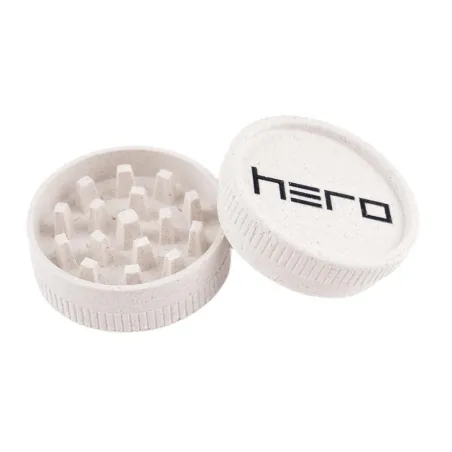
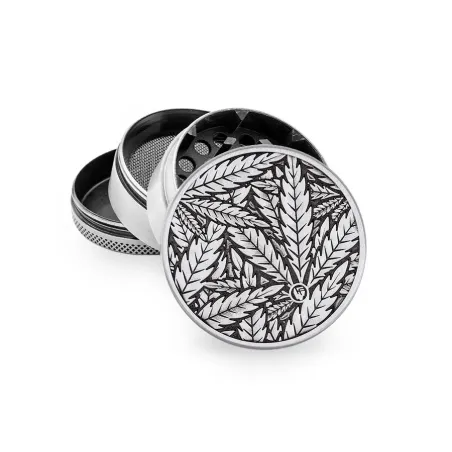
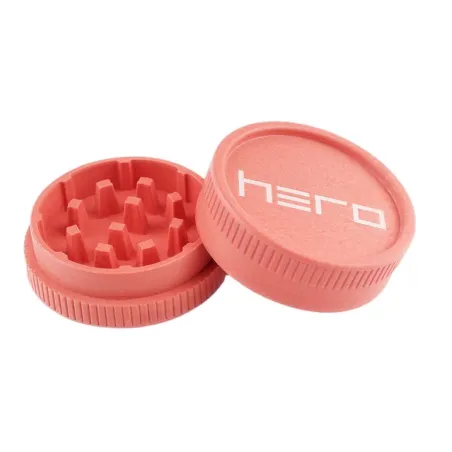
2-part mills are the simplest option: top with tines, bottom with tines, you turn and you're done. They don't have a collection chamber or a sieve for kief - the ground dried remains between the teeth and you dump it by hand. They work well as a compact grinder on the go or as a spare grinder for your EDC kit. Easy to clean, not much breaks in them.
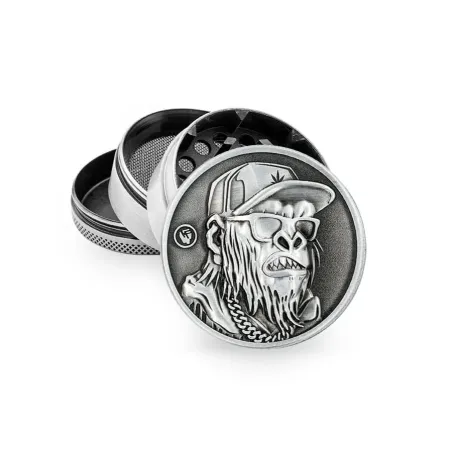
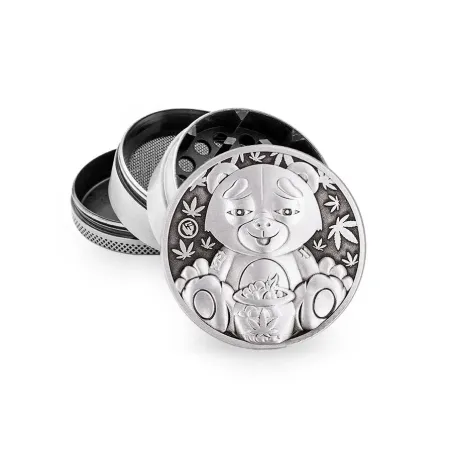
4-part grinders (with a kief chamber) are the standard among people who vaporize regularly. After grinding, the dry goes through a sieve into a collection chamber, and the finest dust - cannabinoid-rich trichomes - fall lower into a separate cell. Over time, you collect the concentrate there, which you can use in a vaporization session at higher temperatures. If you vaporize daily, a 4-piece grinder is an investment that pays for itself.
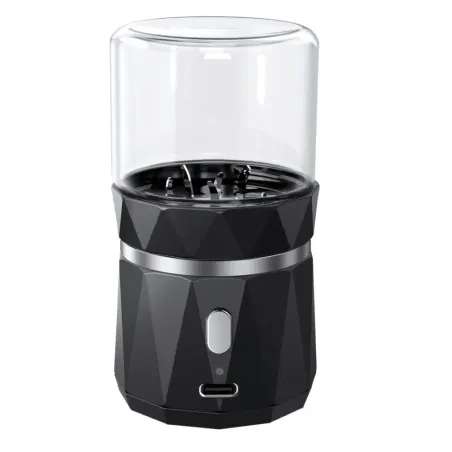
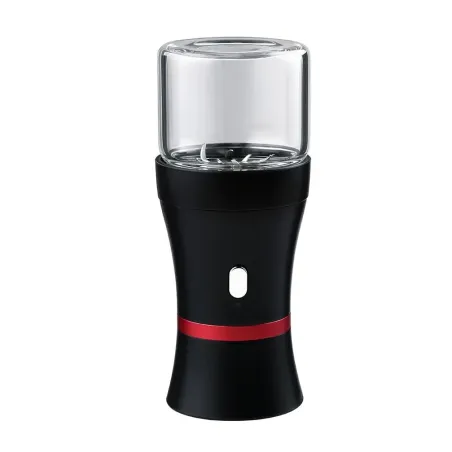
Electric grinders eliminate manual effort. All you have to do is pour in the dry, press a button and after a second you have a ready grind. It's an option especially worth considering for people with limited hand dexterity, medical patients who grind regularly, and those who prepare larger quantities of material for backup. The downsides? A rechargeable battery, a little less control over grinding thickness and a higher starting price.
Aluminum (anodized) - by far the most popular material, and for good reason. Anodizing creates a hard protective layer that prevents filings and oxidation. Aluminum mills are lightweight, durable and available in every price range. What to watch out for For cheap "aluminum" grinders without anodizing - these can leave metallic filings in the dry, which is unacceptable when inhaling the vapor. If you see a brand name and information about anodizing (e.g. CNC-machined, anodized aluminum) - this is a safe choice.
Stainless / surgical steel - the most durable and hygienic material. It does not corrode, does not react with the dry, does not leave filings. Steel mills are heavier than aluminum, which for some is an advantage (more stable grinding), and for others a disadvantage (less handy for travel). The price is higher, but it's a purchase for years - steel hardly wears out. In the context of medical vaporization, where the purity of the material is a priority, steel is the material of first choice.
Wood - an aesthetically pleasing, natural material with one major drawback: wooden teeth (pins) do not grind as finely as metal ones. Wooden grinders give a coarser grind, which will not work in most vaporizers that require a fine consistency. An additional downside: wood absorbs moisture and odors, and is harder to clean to a fully sanitary state. The pluses? Appearance and no risk of metallic filings.
Acrylic / plastic - the cheapest material, often found in promotional grinders. Acrylic grinders are lightweight and colorful, but the teeth dull quickly, and over time can crack or crumble into the dry. With vaporization, where the heated material goes directly into the respiratory tract, fragments of plastic in the grind are a real risk. If you're concerned about safety and session quality - drop the acrylic right away in favor of aluminum or steel.
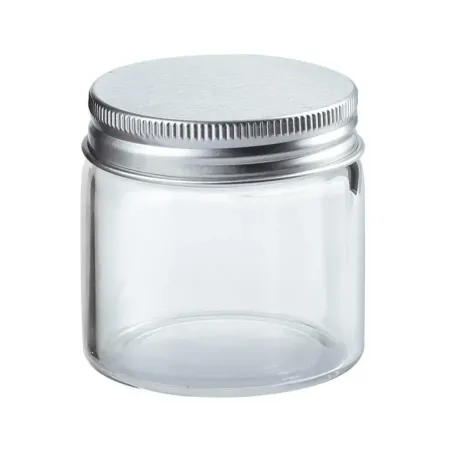
Have you ground more than you need for one session? Don't leave the grind in the mill - it loses its aroma, dries out and degrades the terpenes responsible for the aromatic profile and potential therapeutic properties. The best solution is a vacuum container, which cuts off the access of air and keeps the dried product fresh for up to several weeks. Milling in a vacuum container preserves the terpenes and optimal moisture content, so each successive session produces a repeatable effect.
For medical vaporization, where patients often prepare doses in advance for an entire week, sealed dry containers are not an option - they're a necessity. Ground material in an ordinary pouch or open container loses its properties much faster than uncrushed flowers.
Resin and dried residue settle on the teeth, sieve and threads, which over time makes grinding more difficult and degrades the quality of the grind. A dirty grinder gives an uneven consistency, and deposits can transfer into the vaporizer chamber. We offer cleaning products and accessories - isopropyl alcohol, brushes and kits dedicated to grinders and vaporizers. Regular cleaning every 2-3 weeks will keep your grinder in full working order and prolong its life.
For vaporization, a 4-piece mill works better. Thanks to the sieve, it separates fine, even milling from kief - such consistency ensures optimal filling of the heating chamber and better extraction of active ingredients. 2-part mills give a slightly coarser grind, which may not provide the full efficiency of the session.
Anodized aluminum mills are safe to use. The anodizing process creates a hard protective layer of aluminum oxide, which prevents the metal from grinding into the dry. The problem with filings only affects cheap, non-anodized grinders. For vaporization, where the material goes into the respiratory tract, it is worth investing in proven brands with certified material.
With regular use - every 2-3 weeks. Take the mill apart, freeze it for 20-30 minutes (the resin will harden and be easier to remove), clean the teeth and screen with a toothbrush, then wash the parts with isopropyl alcohol and rinse with warm water. A clean grinder gives an even grind and does not carry sediment into the vaporizer chamber.